How much lead time should a bakery require before it stops taking custom cake orders for a date?
Lead time is the difference between a calm week and a late-night fondant panic. Here is how to set a cutoff that reflects your real capacity and how to communicate it so customers plan ahead.
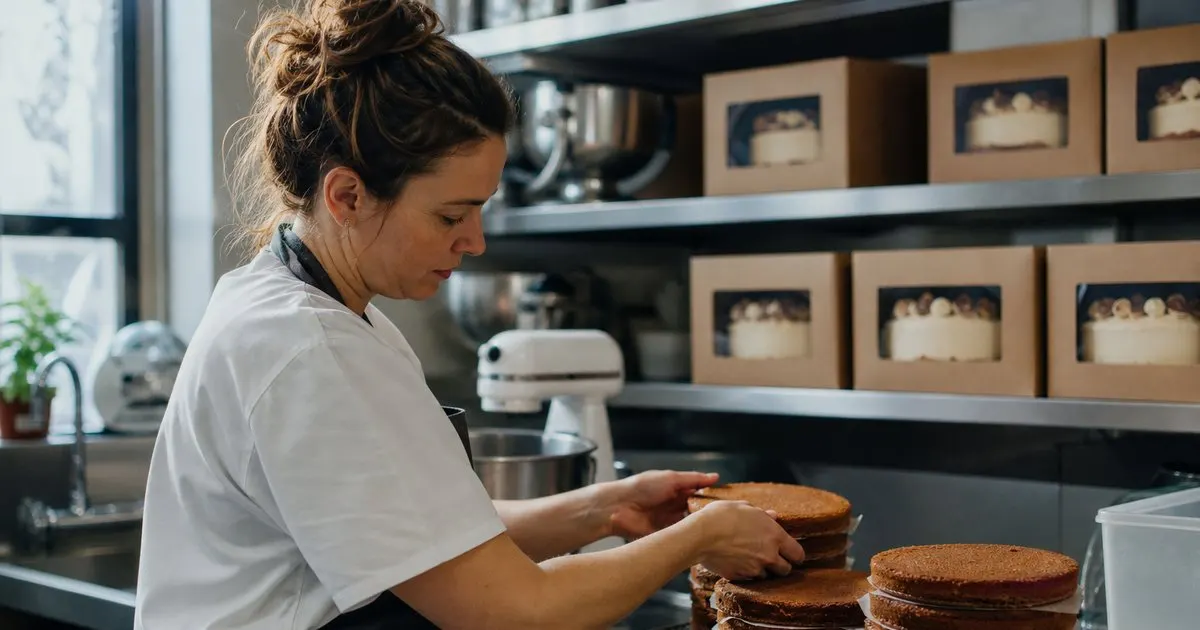
Start from your process, not from what other bakeries post
Lead time is not a marketing number. It is the sum of steps that must happen in sequence before a cake is ready: ordering supplies that ship (boards, boxes, toppers, specific colors), baking, cooling, filling and crumb coating, chilling, final decorating, and any sugar work that needs days to dry. Gum paste flowers, for example, are typically made well before the cake is baked because they need drying time. On top of that sequence sits everything else in your week: other orders, deliveries, and sleep. Related: What is the best way for a bakery to quote custom cake orders quickly so customers do not go elsewhere?
Map a typical order backward from pickup and write down each step with realistic hours. For a one-person shop, a simple buttercream cake might comfortably need three to five days of notice. A multi-tier fondant cake with handmade flowers and a sketch approval step can easily need two to four weeks. Tiered wedding cakes are usually booked months ahead, not because the baking takes months but because consultations, tastings, and design revisions do. Related: How can a home baker manage a cake order calendar so two big cakes do not land on the same day?
Keep reading: How can a bakery collect all the custom cake order details it needs without endless back and forth?, How can a cake artist make sure allergen information is never missed on a custom order form?, What is the best way for a bakery to quote custom cake orders quickly so customers do not go elsewhere?. See how CakeIntakr helps you custom cake and bakery order intake forms.
Use tiers of lead time instead of one blanket number
A single cutoff either scares away easy orders or lets impossible ones through. A one-week rule turns away the customer who wants a plain vanilla cake for Thursday, while a three-day rule invites a request for a carved dinosaur on Saturday. Split your cutoffs by category: standard cakes from your set menu, custom decorated single tiers, tiered or sculpted cakes, and weddings that require a consultation first. Publish each category's minimum notice directly on the order form, not on a separate policy page. Related: How can a bakery collect all the custom cake order details it needs without endless back and forth?
Enforcement is the part that saves your evenings. If the form's date picker greys out dates that fall inside the cutoff for the selected cake type, you never have to write another apologetic decline. This is a feature we built into CakeIntakr early because bakers told us that saying no by hand was one of the most draining parts of the job. If your current form cannot do that, at least put the cutoff at the very top in plain language and repeat it in the auto-reply. Related: How can a cake artist make sure allergen information is never missed on a custom order form?
Rush orders: say yes on your terms or say no cleanly
Decide in advance whether you take rush orders at all, because deciding in the moment almost always means saying yes at your own expense. If you do accept them, attach conditions: a rush fee that reflects the disruption, a limited menu of flavors you always have on hand, no new or complex designs, and full payment before you start. If you do not accept them, a friendly automatic reply with your earliest available date does more for your reputation than a slow, guilty no.
The rush fee should be honest rather than punitive. It pays for shuffling other work, the late night, and the extra trip for ingredients. Some bakers set it as a percentage of the order, others as a flat add-on, and either works as long as the customer sees it before they submit. What does not work is a surprise fee in the quote after the customer thought they already had a yes.
Communicate cutoffs where people actually look
Almost nobody reads a policies page before ordering. Put lead time in the places people actually see: the first line of the order form, the date picker itself, your social media bio, the auto-reply to new inquiries, and the confirmation email. Say it as a date rather than a rule wherever possible. The earliest date we can take a new custom order is a specific day is far easier to act on than a phrase like seven days minimum.
Revisit your cutoffs a few times a year. Lead time should stretch in wedding season and around major holidays and can shrink in slow months. Your own inquiry data tells you when to adjust: if you are routinely declining orders inside the cutoff that you could actually have handled, the cutoff is too long; if you keep accepting orders that leave you exhausted, it is too short. Comparing requested dates against inquiry dates over a few months makes the pattern obvious.
- Calculate lead time from your real production steps, including supply shipping and sugar-work drying days.
- Set separate cutoffs for menu cakes, custom single tiers, tiered or sculpted cakes, and weddings.
- Let the date picker enforce the cutoff so you stop declining orders by hand.
- Take rush orders only with a visible fee, a limited menu, and full payment up front, or decline with the next open date.

Julien Jimenez
Julien Jimenez is an independent software builder based in Paris. He designs, ships, and operates focused SaaS products for small businesses and independent professionals. Read the full author page.
Cake orders without the mix-ups
Custom cake and bakery order intake forms. CakeIntakr is built to help you put this into practice.
Build your intake formMore from the CakeIntakr blog

Get the CakeIntakr playbook
Practical guides on bakery operations, straight to your inbox as we publish them. No spam, unsubscribe any time.