Which custom cake requests should a small bakery decline, and what is a graceful way to say no?
Every yes to a badly matched order is a quiet no to a better one later that week. Here is how to spot the requests worth refusing, how to let the intake form refuse most of them for you, and how to decline in three sentences.
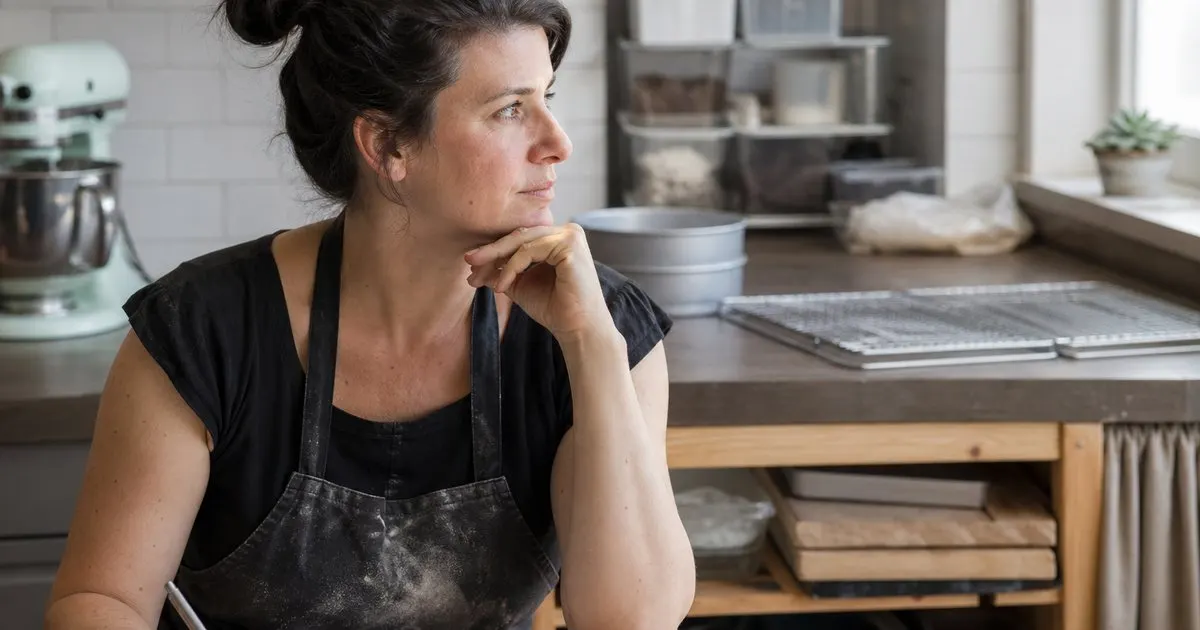
The requests that reliably cost more than they pay
Five categories come up again and again. The first is work outside your actual skill set, usually a sculpted or structural piece you have never attempted with a firm deadline attached. The second is a timeline shorter than your process honestly needs, where the only way to say yes is to bake on no sleep. The third is a budget far below your starting price, which does not become workable through negotiation, only through doing less work for less money than the job requires. The fourth is logistics risk: a long drive in summer heat, an outdoor venue with no shade or refrigeration, or a tall stacked cake that has to travel in someone's back seat. Related: How can a bakery collect all the custom cake order details it needs without endless back and forth?
The fifth is the one worth being strictest about. If a customer needs a cake that is genuinely free of a serious allergen and you work in a shared kitchen with flour in the air and shared equipment, the honest answer is no, not a disclaimer buried in a confirmation email. That is a safety limit, not a business preference. Across all five, the real cost is rarely the single order. It is the week around it, the good inquiry you turn away because your Saturday is spoken for, and the finished cake you are not proud enough to photograph. Related: How can a cake artist make sure allergen information is never missed on a custom order form?
Keep reading: How can a bakery collect all the custom cake order details it needs without endless back and forth?, How can a cake artist make sure allergen information is never missed on a custom order form?, What is the best way for a bakery to quote custom cake orders quickly so customers do not go elsewhere?. See how CakeIntakr helps you custom cake and bakery order intake forms.
Let the intake form decline most of them before a human is involved
The kindest declines are the ones nobody has to write. An order form can enforce almost all of your limits quietly. Close the date picker inside your lead time so an impossible deadline cannot be submitted. State your service area and let a delivery address outside it explain itself. Publish a starting price and a minimum order value at the top of the form so budget mismatches self-select out. Offer your real styles as a set of choices rather than an open text box that invites anything. Put your allergen and shared-kitchen statement where it is read before the form is filled, not after.
Bakers often worry that a form full of constraints will scare people off. What we hear in practice is that a filtered form produces fewer inquiries and more bookings, because the people who complete it already fit. Keep the tone welcoming rather than defensive, and give the filtered-out customer somewhere to land: a waitlist for that date, a note about which dates are still open, or a simpler ready-made option you do offer. Also make it explicit that submitting the form is a request, not a confirmed booking, so a full calendar is never a surprise.
How to say no in three sentences
When a request does reach you, reply within a day. Speed is most of the courtesy here, because someone with a party on the calendar needs time to find another baker. The structure that works is three sentences. Thank them and mention one specific detail from their request, which proves you read it. Decline plainly, with a reason framed around your capacity or your scope rather than around their taste or their budget. Then offer one concrete alternative: a different date you can do, a simpler version within reach, or the name of a baker whose work you would stand behind. Related: How can a home baker manage a cake order calendar so two big cakes do not land on the same day?
The failure modes are just as consistent. Ghosting is the most common and the most damaging, because silence gets read as rejection plus rudeness. Over-explaining is next: four paragraphs justifying your pricing invites a negotiation you did not want. Inventing a fake excuse traps you the moment that date shows up as available on your social feed. Worst of all is the soft maybe offered out of kindness, which holds a date hostage for a week and ends in a harder no. Save your wording as a template you can adapt in thirty seconds, so declining stops being an emotional task you postpone.
The requests worth a counteroffer instead of a refusal
Not every awkward inquiry deserves a no. A repeat customer with a tight deadline has earned a phone call. An out-of-area wedding can work once a delivery and setup fee genuinely covers the drive and your time. A rush order can work with a rush fee that reflects the evening it will cost you. A design that is beyond your budget in fondant may be well within it as a buttercream version with a single sculpted feature. And occasionally a difficult request is exactly the piece your portfolio is missing, in which case the right move is to price it honestly and accept that you are partly paying yourself in photographs. Related: How should a bakery capture cake design details so the finished cake matches what the customer pictured?
Make the counteroffer specific and easy to answer. Name what you can do, with the date, the scope, and the price, and let the customer choose rather than asking them to come back with a new idea. Something like: I cannot build the sculpted design by Friday, but I can do a two-tier version with a hand-modeled topper for that date, or the full sculpted piece the following Saturday. Give the offer a short expiry so a held date does not drift, and keep a rough count of how many counteroffers get accepted. Most bakers who track it find the number high enough to stop declining outright.
- Decline work outside your skills, your lead time, your service area, your price floor, or your kitchen's allergen limits.
- Build those limits into the intake form so most bad-fit requests never become a conversation you have to end.
- Answer within a day using three sentences: a specific thank you, a plain no, and one usable alternative.
- Before refusing, ask whether a rush fee, a delivery fee, or a simplified design turns the order into one worth taking.

Julien Jimenez
Julien Jimenez is an independent software builder based in Paris. He designs, ships, and operates focused SaaS products for small businesses and independent professionals. Read the full author page.
Cake orders without the mix-ups
Custom cake and bakery order intake forms. CakeIntakr is built to help you put this into practice.
Build your intake formMore from the CakeIntakr blog
Get the CakeIntakr playbook
Practical guides on bakery operations, straight to your inbox as we publish them. No spam, unsubscribe any time.