What should a small bakery do when a customer does not pick up a finished custom cake on the agreed day?
A finished cake sitting in the case at closing time is stressful and expensive, but it is almost always a scheduling mix-up rather than a walkaway. Here is the order of operations that saves the cake, the money, and the customer.
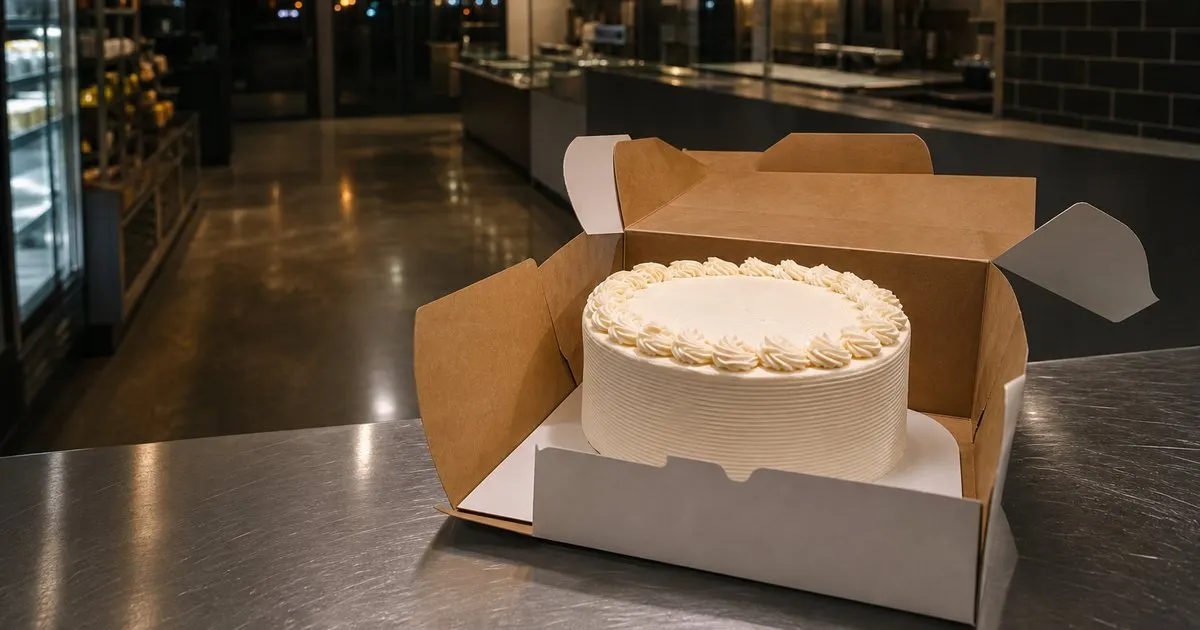
Unclaimed cakes are usually a scheduling failure, not a bad customer
In our experience talking with small bakery teams, a cake that is still in the case at closing time almost never means someone decided to abandon a cake they already paid a deposit on. The causes are dull and repetitive. The customer had Saturday in their head and the order said Sunday. The person collecting was a spouse or a parent who never saw the pickup time. The party was moved and nobody thought to tell the baker. The reminder went to an email address with a typo in it. Illness, travel, and family emergencies account for a real share of the rest. Related: How can a bakery collect all the custom cake order details it needs without endless back and forth?
That distinction matters because it decides what you do in the next hour. If the root cause is a date mismatch, one phone call usually resolves it and you keep both the money and the relationship. If you treat the first missed hour as a breach and send a stern message about your policy, you convert a fixable misunderstanding into a refund argument and, sometimes, a public review that costs far more than the cake. Assume confusion first. Then go back to your intake form and remove the places where confusion was allowed to hide.
Keep reading: How can a bakery collect all the custom cake order details it needs without endless back and forth?, How can a cake artist make sure allergen information is never missed on a custom order form?, What is the best way for a bakery to quote custom cake orders quickly so customers do not go elsewhere?. See how CakeIntakr helps you custom cake and bakery order intake forms.
What to do in the first day, in order
Start with the cake, not the customer. Move it into the safest holding condition you have and write down the time it went there. Buttercream and ganache finishes generally hold well for a day or two in a cool, dark spot away from ovens and direct sun. Cream cheese frostings, fresh fruit fillings, and anything custard based need refrigeration and have a much shorter honest window. Fondant and refrigeration are an awkward pair, because condensation as the cake returns to room temperature can dull or streak a finish you spent hours on, so if you must chill a fondant cake, box it first and let it come back up slowly with the box closed. Related: How should a bakery capture cake design details so the finished cake matches what the customer pictured?
Then work through contact in escalating order, spaced over a few hours rather than fired off in twenty minutes. Text first, because it is read fastest. Then call. Then email, which is the one that survives as a record. Keep every message short and warm, and always state three things: which cake, which date and time was on the order, and how long you can hold it. Log each attempt with a timestamp in the order record itself. If this later becomes a refund dispute, that log is your entire case, and nobody can reconstruct it accurately from memory a week later.
The intake details that prevent most of these calls
Most no-shows trace back to a form that collected a date but not an appointment. Collect a pickup window with a start and end time, not just a day. Ask for the name and phone number of the person actually collecting, which is frequently not the person filling in the form. Ask whether they know where to park and which door to use, because a customer circling the block is a customer who gives up and comes back tomorrow. Confirm all of it back to them in writing, and send a short reminder somewhere between twenty four and forty eight hours before pickup, because that is the point where a wrong date in someone's head is still cheap to fix.
Then write the holding policy into the form rather than leaving it to be improvised later. State how long you hold a finished cake, what happens after that window closes, and what the refund position is. A single plain sentence does the work: cakes are held for a stated number of hours after the pickup window, after which the order is closed and the deposit is not returned. Put a checkbox next to it. The checkbox is not really a legal instrument. Its value is that it forces the customer to read the sentence once, before there is anything to argue about. Related: How can a home baker manage a cake order calendar so two big cakes do not land on the same day?
After the hold window closes
Decide the fate of the cake before you are standing in front of it, tired and irritated. A cake carrying a name, a portrait, or a specific event date is unsellable and pretending otherwise is how bakeries end up with a second complaint. Staff and family are the simplest answer. Donation is possible for a plain cake, but call the receiving organization first, because many have rules about homemade or unlabeled food and about allergen information, and none of them want a surprise delivery at closing time. Whatever you choose, do not photograph the cake as a complaint post. It reads as punishment, and the customer's friends are watching. Related: How can a cake artist make sure allergen information is never missed on a custom order form?
On money, be boring and consistent. The deposit stays, because it covered the reserved date and the supplies you bought for that one order, and because your form said so. Decide in advance whether the outstanding balance is still owed and, in practice, chasing a small balance through a fight costs more than it recovers. Close the order with one short, unemotional message that says the cake was held, the order is now closed, and you would be glad to bake for them again. Many of these people come back embarrassed and grateful. For a repeat of the same customer, ask for payment in full at booking rather than declining outright.
- Treat the first missed hour as a mix-up, not a breach, because most unclaimed cakes are a date or time misunderstanding.
- Stabilize and store the cake before chasing the customer, and timestamp every contact attempt in the order record.
- Collect a pickup window, a second contact name, and a written holding period on the form, not just a delivery date.
- Decide in advance what happens to an unclaimed cake and to the deposit, so you are not deciding it while annoyed.

Julien Jimenez
Julien Jimenez is an independent software builder based in Paris. He designs, ships, and operates focused SaaS products for small businesses and independent professionals. Read the full author page.
Cake orders without the mix-ups
Custom cake and bakery order intake forms. CakeIntakr is built to help you put this into practice.
Build your intake formMore from the CakeIntakr blog
Get the CakeIntakr playbook
Practical guides on bakery operations, straight to your inbox as we publish them. No spam, unsubscribe any time.