How do you write a cake order confirmation that customers actually read and reply to?
The confirmation is your last cheap chance to catch a wrong date or a misspelled name. Here is how to structure it so customers open it, read it, and answer.
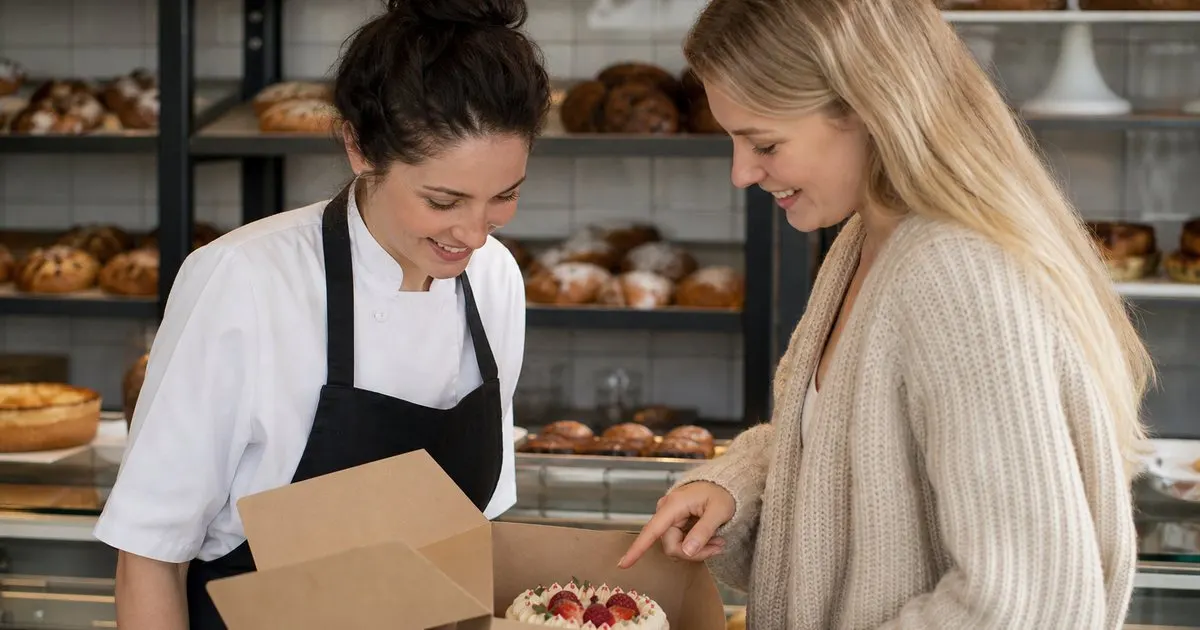
Put the details that hurt most at the top
Order the confirmation by what it costs when it is wrong. Pickup or delivery date and time, written with the day of the week spelled out, comes first. Then whether it is pickup or delivery and the exact address. Then the inscription, verbatim, in quotation marks, with a note that you will write exactly what appears. Then size and servings, flavor and filling, allergens noted, colors, and the reference photo. Price, deposit, and balance follow. The policy goes last. Related: How can a cake artist make sure allergen information is never missed on a custom order form?
In our experience, spelling out the weekday catches more date errors than almost any other detail, because customers instantly notice when Saturday appears next to a date they pictured as Sunday. Using the customer's own words for the design, where possible, helps them recognize the order as theirs and spot the one line that does not match. A confirmation written entirely in your shorthand reads like a receipt, and people do not proofread receipts. Related: How should a bakery capture cake design details so the finished cake matches what the customer pictured?
Keep reading: How can a bakery collect all the custom cake order details it needs without endless back and forth?, How can a cake artist make sure allergen information is never missed on a custom order form?, What is the best way for a bakery to quote custom cake orders quickly so customers do not go elsewhere?. See how CakeIntakr helps you custom cake and bakery order intake forms.
Ask for an explicit yes, with a deadline attached
A confirmation that ends by inviting the customer to let you know if anything is wrong gets ignored, because silence feels like agreement to the customer and like uncertainty to you. End with a direct request: reply YES to confirm, or reply with any changes, by a specific date. Tie that date to your design lock so the reply arrives before you buy supplies or start sugar work.
If no reply comes, send one short reminder. After that, proceed on the details as written, and say in your policy that you will. Store the confirmation reply with the order so the yes is on record. At higher volumes, an intake tool can track which orders are confirmed and which are still waiting; at lower volumes, a column in a spreadsheet does the job as long as you actually look at it. Related: How can a bakery collect all the custom cake order details it needs without endless back and forth?
Format for a phone screen and for the kitchen wall
Most customers open the confirmation on a phone, often while doing something else. Use short lines, bold labels, and no wide tables that break on a small screen. Put the essentials in the first screen and the policy below. Make the subject line do work: bakers tell us that a subject naming the weekday and date and asking them to confirm gets opened and answered more reliably than a generic order confirmation.
The same summary should become your kitchen ticket. When the confirmation and the ticket are generated from the same order record, nothing is retyped and nothing drifts. That principle shaped how CakeIntakr produces its order summaries, and it holds for any system: one record, several views. If you work from a spreadsheet and a template, at least copy from a single source rather than rewriting from memory. Related: How can a home baker manage a cake order calendar so two big cakes do not land on the same day?
Send follow-ups at the moments that matter
A good sequence has four messages. The confirmation at booking. A final check at the design lock date, with the full summary and the balance due. A ready-for-pickup message on the day, with the time, the address, and a couple of transport tips. A thank-you after pickup with a gentle request for a review. Each message repeats the key details, because repetition is how mistakes get caught.
When a customer reports an error, reply with the entire corrected summary rather than just the changed line, so there is always one current version and never a chain of partial updates to reconcile. Mark the old version as superseded in your records. The goal of every message in the chain is the same: the customer and the kitchen looking at exactly the same cake.
- Lead with date and weekday, address, verbatim inscription, size, flavors, and allergens.
- End with a request to reply yes or with changes by a date tied to the design lock.
- Write for a phone screen and generate the kitchen ticket from the same record.
- Follow up at lock, on pickup day, and after, and always resend the full corrected summary.

Julien Jimenez
Julien Jimenez is an independent software builder based in Paris. He designs, ships, and operates focused SaaS products for small businesses and independent professionals. Read the full author page.
Cake orders without the mix-ups
Custom cake and bakery order intake forms. CakeIntakr is built to help you put this into practice.
Build your intake formMore from the CakeIntakr blog
Get the CakeIntakr playbook
Practical guides on bakery operations, straight to your inbox as we publish them. No spam, unsubscribe any time.